Oak, Ash or Beech? Reading the Character of Wood Grain
Compare oak, ash, and beech wood grain beside your floors and fabrics to choose furniture whose pattern and color feel at home in the room.
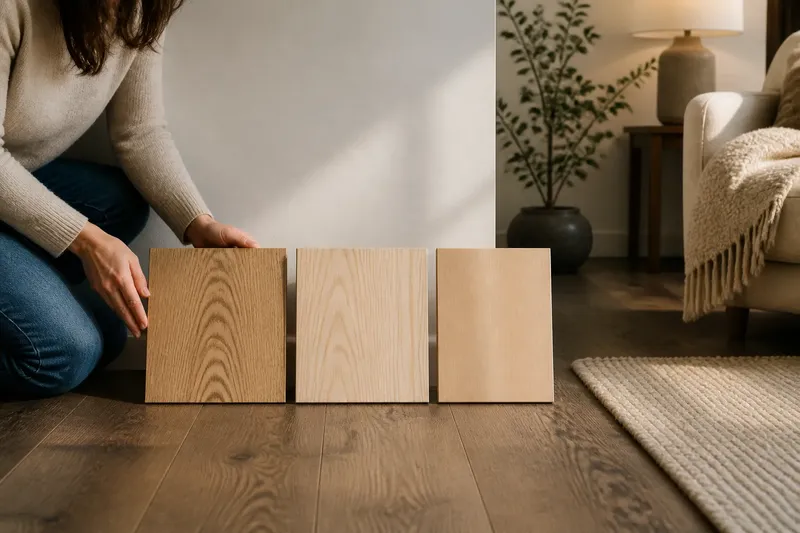
Oak, ash, and beech wood grain can make a new table feel either at home or oddly busy beside the floor. Their differences are easier to judge in the room than on a product page: oak often has varied, open markings, ash tends toward long lines, and beech usually looks more even.
Look at the actual finished surface beside the materials that will stay. Color, cut, finish, and the amount of wood on display all shape what you see, so a species name is only a starting point.
What does oak grain bring to a room?
Oak often shows open grain with long lines, arcs, and irregular marks. Some cuts also reveal flecks. The result can feel grounded and visually substantial, even in a pale finish.
A warm finish may bring out amber or honey notes; a darker one can make the pattern more prominent. The exact appearance varies, so compare the finished piece or a representative sample with the room’s fixed surfaces.
Oak can sit comfortably beside textured materials such as linen, wool, and stone, but it may add visual activity if the floor already has pronounced wood grain. A broad tabletop puts more pattern in view than narrow legs or a small frame. If the floor is already the room’s strongest wood surface, consider a quieter cut, a restrained finish, or a design that exposes less wood.
Why does ash grain look so directional?
Ash often has long, open streaks that give its surface a clear direction. Its pale appearance does not necessarily make it visually quiet; the lines can still catch the eye.
That direction can echo a tabletop, cabinet front, or other linear detail. It can also compete with striped fabric or repeated lines in nearby cabinetry. If those patterns already dominate, a smaller ash accent or a design with interrupted panels may be easier to place than a large, uninterrupted surface.
Finish affects the impression. A clear or lightly tinted surface may preserve a pale look, while a darker treatment can make the grain read differently. Check the finished wood under the light where it will live rather than assuming ash will look uniformly white or cool.
When is beech the quieter choice?
Beech usually has a finer, more even-looking grain than oak or ash. Its pale tone may lean pink or golden, depending on the piece and finish. That restrained pattern can let a patterned fabric, veined stone, or strongly grained floor remain the main attraction.
Beech is not invisible: a wide panel still brings color and presence. Look at the actual item, especially if several boards or faces will be visible, because the tone can vary across the piece.
Say you are choosing a compact side table for a room with a cool gray floor and a cream wool chair. You place a finished beech sample beside both surfaces in daylight, then check it again under the room’s evening light. If it looks too pink beside the floor, you can compare another finish or choose a different species; if it softens the contrast without distracting from the chair, beech may suit the role.
How should each grain relate to existing materials?
Start with the surfaces that are staying: flooring, built-in cabinets, stone, tile, and large upholstered pieces. Notice their dominant colors and whether their patterns look smooth, mottled, striped, or strongly figured. Then decide whether the new wood should echo those qualities or offer a calmer contrast.
- Pronounced wood flooring: Check whether the furniture sample’s grain merges with the floor. If the patterns blur together, choose a quieter cut or a clearer contrast; if they read as separate surfaces, the pairing may work.
- Patterned fabric: Check whether the wood’s lines compete with the fabric. If both pull attention, try finer-grained beech or a smaller wood accent; if the fabric remains distinct, the current grain may be suitable.
- Stone or tile: Check whether the surface is strongly textured or directional. If it already has busy markings, compare it with beech; if it feels visually plain, oak’s varied grain or ash’s long lines may add the pattern you want.
- Painted furniture: Check whether the wood looks comfortably warm, unexpectedly pink, or starkly cool beside the paint. If the undertones clash to your eye, compare another finish; if they sit easily together, an exact color match is unnecessary.
- Large wood panels: Check how much grain is visible from the usual viewing distance. If the pattern dominates more than you want, consider a smaller piece or a design with less exposed wood; if it provides the emphasis you want, keep the larger surface in consideration.
- Room lighting: Check the sample in daylight and in the room’s evening light. If its color shifts in a way you dislike, compare another finish under both conditions; if it remains comfortable beside the fixed materials, keep it on the shortlist.
These are ways to compare, not fixed pairings. A different cut, finish, furniture shape, or amount of visible wood can change the balance.
What should you check before choosing oak, ash, or beech wood grain?
Should wood grain match the floor?
No exact match is needed. If matching makes separate pieces look like an uncertain set, compare a quieter grain or a more deliberate contrast instead.
Can a finish change how grain looks?
Yes. Clear coats, stains, oils, and tinted finishes can shift color and affect how prominent the grain appears. If possible, compare the finished surface rather than relying on the species name.
How can you tell oak, ash, and beech apart?
Oak often has open, varied markings, ash commonly shows long directional lines, and beech tends to look finer and more even. These are visual tendencies, so check the actual piece for its particular color and pattern.
Where should you view a wood sample?
Set it beside the floor, nearby furniture, and any fabric or stone it will share space with. If it looks different in daylight and evening light, use both views to decide which appearance matters most in the room.
How can a sample settle the choice?
Decide what role the furniture should play before comparing species. A dining table may be a central surface where oak’s variation feels welcome. A narrow shelf beside patterned wallpaper may call for beech’s quieter grain, while an ash cabinet front can bring movement to a room of smooth, simple finishes.
Imagine a living room with a boldly grained floor and a plain pale wall, and say you are choosing a low console. You bring home small finished samples of oak, ash, and beech and place each on the floor near the wall. Oak’s pattern seems to merge with the floor, ash’s long lines draw the eye across it, and beech creates a calmer outline. If your aim is to keep the floor prominent, beech is the clearest fit among those samples; if you want the console to add movement, ash is the more suitable option. The choice follows the role you want, not a rule that one species always works best.
It is not worth trying to make every wood tone in a room identical. Instead, check whether each surface has a clear visual job: oak for varied pattern, ash for directional lines, or beech for a more even grain that lets another material lead.
For oak, ash, or beech wood grain, the most useful comparison is the finished sample beside the floor and upholstery, viewed from the distance where you will see the furniture. That small bit of context can reveal whether a wood’s pattern belongs in the room before you commit to its role.