The Guest-Ready Room Is Not a Standard
A guest-ready room can still serve your household. Compare three flexible setups and choose one that welcomes visitors without wasting useful space.
A guest-ready room can serve your household every day and still welcome an overnight visitor. Start by deciding what the room needs to do between visits, then choose a sleeping arrangement and a simple changeover that fit those routines.
That everyday job might be reading, sewing, working, storing sports gear, or giving a child a quiet corner. The choice is not between a pristine guest room and an inhospitable multipurpose room. It is between different ways of making the room change roles, and the right one depends on how often guests stay, how much space you have, and what your household actually does there.
What should a guest-ready room make possible?
Start with the visit, not with a matching furniture set. A comfortable overnight stay generally calls for a place to sleep, a surface for a phone or glass of water, a light the guest can reach, and somewhere to put a bag and a few clothes. Privacy and access to a bathroom matter too, though the home’s layout may shape those options.
Then name the room’s everyday purpose. “We need storage” is less useful than “the vacuum, board games, and extra bedding need a home.” “We need a workroom” becomes clearer when you know whether that means a laptop and notebook or a permanent monitor and printer. Specific needs help you avoid furniture that serves no one particularly well.
Keep the two lists side by side. If an item supports neither ordinary household use nor a visitor’s comfort, it may not belong in the room. A decorative tray bought for a hotel-like effect, for instance, is unlikely to earn its space if the household has no use for it.
Should the room stay a dedicated guest room?
A dedicated guest room is a straightforward choice when visitors stay often, need a dependable degree of privacy, or have mobility needs that make a familiar sleeping setup helpful. It also suits households with enough rooms that keeping one ready does not displace a daily activity. The bed can remain made, with essentials such as a reading light, wastebasket, and a few hangers in place.
The trade-off is that a room reserved for occasional visitors can sit mostly idle. That can feel wasteful if another part of the home is crowded or a household activity lacks a comfortable home. A broad bed frame, bedside tables, and a dresser can also leave little usable floor area.
If you choose this approach, make the room comfortable rather than theatrical. Clean sheets, a working bedside lamp, and a clear place for belongings do more than matching cushions or a decorative bed scarf. Store spare linens where they are easy to find, and leave a surface usable instead of filling every corner with guest-only touches.
Can the room work as a studio and a guest room?
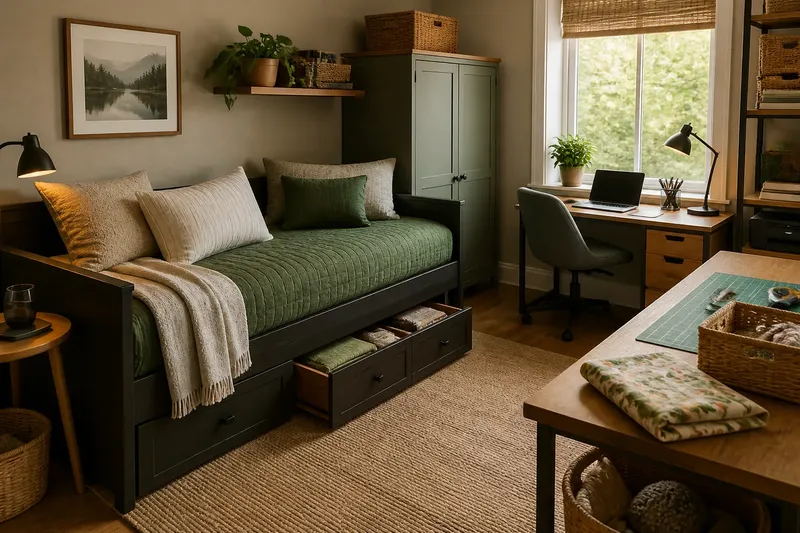
A shared-purpose room suits people who need a regular workspace or hobby area and host visitors occasionally. Let the furniture support daily activity first, while keeping a sleeping arrangement that can be brought into use without dismantling the room. A daybed with drawers, wall bed, or compact sofa bed may fit, depending on the layout and the comfort expected for an overnight stay.
Each option has trade-offs. A daybed can serve as a seat but may look and feel more like a bed than a conventional sofa. A sofa bed preserves a sitting area, but its open footprint needs to fit. A wall bed can leave the floor open when closed, while its surrounding cabinetry may occupy visual and physical space. Check product dimensions and operating instructions, and consider what other pieces must move when it opens.
Give work or hobby tools a home that can be tidied without a complicated reset. A lidded basket for knitting, a drawer for paper supplies, or a cabinet for a printer can help the room shift into guest mode. Keep the bedside light and surface separate from the work setup, so a laptop charger and project materials do not occupy the visitor’s only convenient spot.
Say a household uses a spare room for mending clothes and occasionally hosts a relative. They choose a daybed with drawers for fabric, a lidded sewing basket, and a folding cutting mat. Before the visit, they put away the active project, add fresh bedding, and clear the daybed’s side surface. The result is a sewing room that still offers a prepared, accessible place to sleep.
Would a storage room with a guest bed suit you?
This arrangement works for households that need seasonal storage or supplies close at hand but still want an occasional visitor to have a proper sleeping place. A bed can coexist with storage if the contents are contained and the guest does not have to climb over boxes or search through family belongings. A closet, closed cabinet, or orderly set of labeled bins can keep everyday items accessible without putting them on display.
The distinction between useful storage and overflow matters. A guest should be able to reach the bed, set down a bag, and move through the room without asking the host to shift things. If storage has spread onto the sleeping surface or the only clear chair, the room is not ready simply because a bed is present.
Choose storage that serves the household’s routine rather than buying containers first and deciding what to keep later. A cabinet near the door may suit frequently used linens; deep bins may work for seasonal items that are rarely needed. Keep a shelf or hanging space free for the guest, and avoid assigning every surface to storage.
What is not worth the effort? Clearing the entire room into another room whenever a guest arrives. That only relocates the clutter and adds a stressful hosting task. A modest, repeatable reset is more useful than a dramatic cleanup the household will dread repeating.
How do you choose a guest-ready room setup?
Use the room’s actual pattern of use to make the decision. Think about who visits, how long they stay, which household activity needs the room, and what must remain available while guests are there. A household that hosts a friend for an occasional night may favor a simple fold-out sleep surface; someone who welcomes a relative for longer visits may prefer a settled bed and clothing storage.
- Check visitor frequency: If overnight visits happen often and the room can remain guest-focused without crowding daily life, choose a dedicated guest room; otherwise, consider a shared-purpose setup.
- Check the daily activity: If work or hobbies happen there regularly, choose furniture that supports that task and can be cleared with a simple reset; if not, a dedicated bed may be more useful.
- Check sleeping access: If the likely guest can comfortably use the bed or fold-out surface, keep that option; if not, consider a different bed style and seek qualified advice when a mobility concern calls for it.
- Check the open footprint: If a sofa bed or wall bed opens without blocking the route or essential furniture, it may fit; if it blocks access, choose another sleeping arrangement or revise the layout.
- Check the changeover: If preparing the room means only putting away a project, making the bed, and clearing a surface, the setup is manageable; if it requires awkward moves, simplify storage or choose a different use.
- Check belongings and circulation: If the guest can reach the bed, set down a bag, and move to the door without shifting household items, keep the storage plan; if not, remove or relocate overflow.
Imagine you use a spare room for a laptop desk and craft supplies, and a relative visits now and then. You list the daily needs as a desk, printer, paper, and a clear work chair; the visitor needs are a comfortable bed, reachable light, a place for a bag, and a little hanging space. You compare a sofa bed and a daybed, then check each in its open position against the doorway and desk. The sofa bed blocks the route, while the daybed leaves it clear, so you choose the daybed, store craft supplies in a lidded basket, and reserve a drawer for guest linens. Before the visit, you put away the active project, make the bed, and clear the side surface. The trade-off is a room that looks more like a bedroom every day, but the desk and supplies remain usable and the guest has an unobstructed sleeping area.
For furniture choices governed by product labels or manufacturer instructions, follow those directions rather than assuming every model works the same way.
What do visitors need from a flexible room?
A useful room gives guests a few clear cues. They should be able to tell where to put a bag, how to switch on a light, and where clean bedding or towels are kept if those items are not already set out. A brief welcome can answer practical questions without turning the room into a staged display.
Comfort also comes from what is not in the way. Leave a section of the closet or a few hangers free, keep the route to the door unobstructed, and make sure the bedside surface is not occupied by household projects. If guests share the home’s bathroom, a clear place for toiletries elsewhere may be more useful than adding decorative items to the bedroom.
How much should you furnish a guest room? A bed, a reachable light, and a place for a few belongings are a sensible starting point. Add more only when an actual visit or the room’s daily use calls for it, rather than trying to imitate a hotel.
Can a home office still feel welcoming to an overnight guest? Yes, if work items can be contained and the sleep surface is comfortable and accessible. A clear bedside spot and fresh bedding help distinguish the guest arrangement from the workday setup.
Is a sofa bed right for every spare room? No. Comfort and open footprint vary by model, and a low or folding surface may not suit every guest. Consider who is likely to use it and check the furniture in its open configuration before committing.
How can a storage room feel less like a storage room? Keep supplies in closed or orderly containers, reserve a specific place for guest belongings, and leave the sleeping area visibly clear. The room need not hide every sign of household life; it should simply be easy to use.
What does guest-ready mean in your home?
Think of guest-ready as a condition the room can reach, not a permanent style it must maintain. A well-used room may have a sewing basket, desk, or orderly storage in view and still welcome a visitor. Its success lies in supporting daily life while making a comfortable stay possible without a household-wide rearrangement.
For many homes, the best guest-ready room is a shared one with a simple changeover: put away the current task, clear the visitor’s surface, make the bed, and set out what the guest needs. Use that routine as a design aim, then adapt it to your visitors and household habits. A room that earns its place every day can be more considerate than a perfect suite no one uses.