A Small Display for Things You Reach for Often
A small display for things you reach for often keeps daily objects easy to grab while giving a tray, shelf, or wall hook a calm, intentional look.
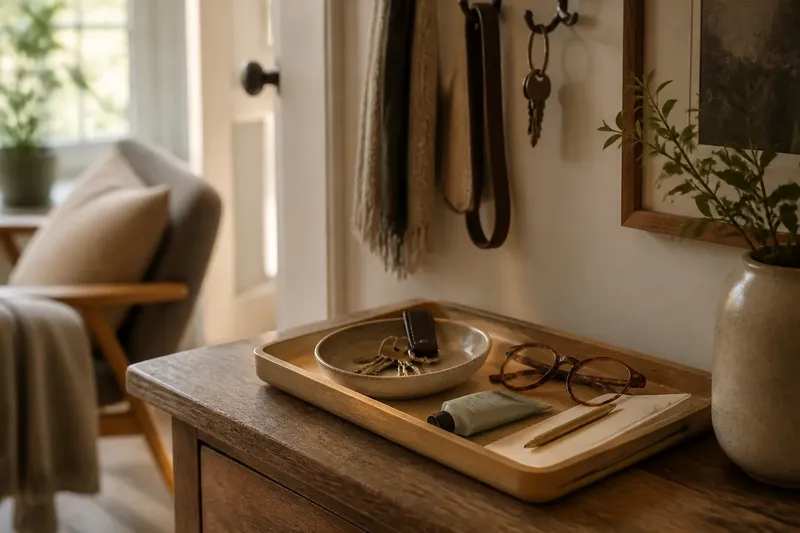
A small display for things you reach for often works best when it follows your routine, not a picture in a catalog. Put the objects near the moment you use them, give each one a clear place, and leave enough room to pick them up without shifting the rest.
This is a display with a job: the keys you carry, the glasses you wear, the hand cream you use before bed. A compact tray on a console, a shallow shelf beside a chair, or a few hooks near a doorway can gather those items without turning them into a cluttered catchall. Try the plan over a week, adjusting it as real habits become visible.
What belongs in a small display?
Choose objects that share a routine and are genuinely handled often. Frequency matters more than sentimental value here; a keepsake that you rarely touch may deserve another home, while a plain pen you use daily earns its spot.
- List the items you reach for in one specific part of the day, such as leaving home or settling in for the evening.
- Keep the list to a small group that can sit without overlap on the surface you have in mind.
- Separate daily necessities from occasional items. A spare charging cable or a stack of mail can live elsewhere if it makes the display harder to use.
Say you notice that you set your reading glasses, lip balm, and a bookmark on the arm of your living-room chair each night. Imagine moving those three objects to a shallow dish on the nearby side table, with the bookmark beside rather than under the glasses. The expected observable result is that you can pick up each item directly and the chair arm stays clear.
Where should the display sit?
Start at the point where the routine happens. If you drop keys as you come in, a small tray on the entry console may fit better than a decorative bowl in the living room. If you use a notebook while seated, a nearby shelf or table keeps it within reach without asking you to cross the room.
Check the display from a standing and seated position. Can you see what is there? Can you lift each item without moving a vase or nudging a lamp? A shallow tray or low-rimmed dish can define a landing area, while wall hooks free a narrow surface for objects that should hang.
Make sure the chosen spot does not obstruct a door, drawer, or the ordinary path through the room. The goal is a convenient pause point, not a new obstacle or a reason to rearrange the whole room.
How can everyday objects look grouped?
Give the group one visual anchor, such as a wooden tray, a small ceramic dish, or a folded cloth. Then let the useful objects remain visible rather than lining every item up like a shop display. A little variation in height and shape gives the arrangement character; too many containers can make it fussy.
Use the surface to set a boundary. Keep the objects inside the tray or within the footprint of the shelf, and leave a small open patch for setting something down temporarily. If a tall object hides a smaller one, change their positions instead of adding another container.
Color can tie a collection together without requiring matching pieces. A dark leather key fob, a cream notepad, and a brass pen may look composed against a pale wood tray because their tones are distinct but not competing. If the items are already colorful, a quieter base may help the group feel settled.
What should you adjust during the week?
Use the first day to set up a simple version, then let the display meet its actual routine. Resist styling it before you know what gets picked up, what is ignored, and what keeps landing beside it. A scrap of paper or an extra key that repeatedly appears is useful information: perhaps the display needs a little more room, or that item belongs somewhere else.
- Day one: Put the selected objects on the chosen tray, shelf, or hooks. Leave out anything you are unsure about.
- After a few days: Notice whether you reach for items easily and whether you keep setting something down just outside the group.
- Midweek: Move an awkward object, remove an unused one, or make the surface easier to reach. Change one thing at a time so the effect is clear.
- At the end of the week: Keep the arrangement that supports the routine. Relocate any item that still feels like visual or physical clutter.
When the week is unusually busy, do not treat every stray object as evidence that the setup failed. Put the group back in order once, then watch what happens during an ordinary day. It is not worth the effort to keep polishing the arrangement after each use; a display should tolerate a little movement.
What questions help refine a small display?
How many objects should I include?
Include the few items that belong to the same routine and fit without hiding one another. If the surface feels crowded, remove the least-used object before looking for a larger tray.
Should I use a tray or leave the objects loose?
A tray helps when small things tend to drift across a surface or need a defined landing spot. Leave objects loose when the furniture already offers a clear boundary and a tray would make pickup awkward.
What if the useful objects do not match?
They do not need to match; a shared base, similar finish, or simple arrangement can make unrelated pieces feel connected. Keep the most colorful or unusually shaped object visible as a focal point rather than hiding it behind uniform containers.
How do I keep the display from becoming a catchall?
Give it a specific routine and remove items that do not serve that routine. If incoming mail or random receipts keep landing there, move the display closer to the objects’ actual use and choose a separate place for paper.
How does the display stay useful?
Once the arrangement feels natural, treat it as a small piece of household choreography rather than a finished composition. Return each object to its place when convenient, and make room for a new daily item only if it genuinely replaces or joins the routine. If your habits change, the display can change too.
A small display for things you reach for often earns its place through a simple test: the objects are easy to find, easy to lift, and easy to put back. Keep the visual grouping modest and the access uncomplicated, and the corner will look considered without asking you to maintain a showroom.